1604: The Establishment of the Itowappu Trade System
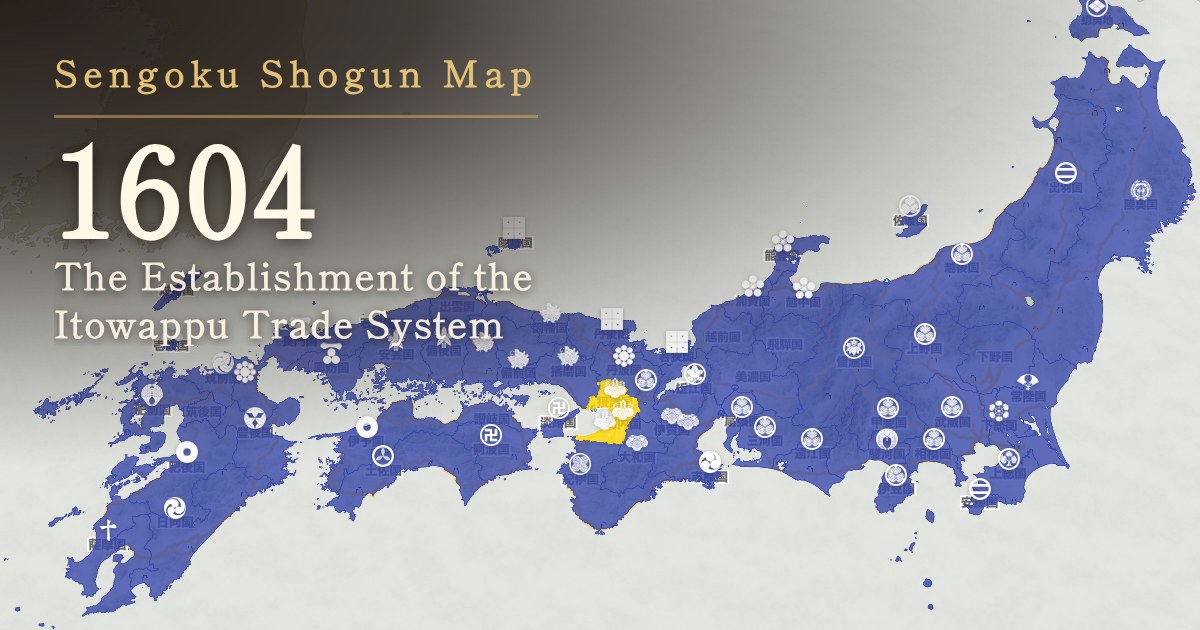
To curb Portuguese merchants' monopoly on profits from the raw silk trade, Tokugawa Ieyasu established the itowappu system, under which designated merchant guilds in Kyoto, Sakai, and Nagasaki collectively purchased imported silk and distributed it domestically. This regulatory measure shifted control over silk pricing to the Japanese side and helped curb the outflow of precious metals overseas.
Events this year
The shogunate designated Nihonbashi as the starting point for national distances and developed a transport system centered on the five highways.
Maeda Toshinaga created an organizational system combining approximately 10 villages in Noto, establishing the foundation of the tomura system, a unique peasant control mechanism that would characterize the Kaga domain.