1558: The Battle of Kitashirakawa and Shogun Ashikaga Yoshiteru's Return to Kyoto
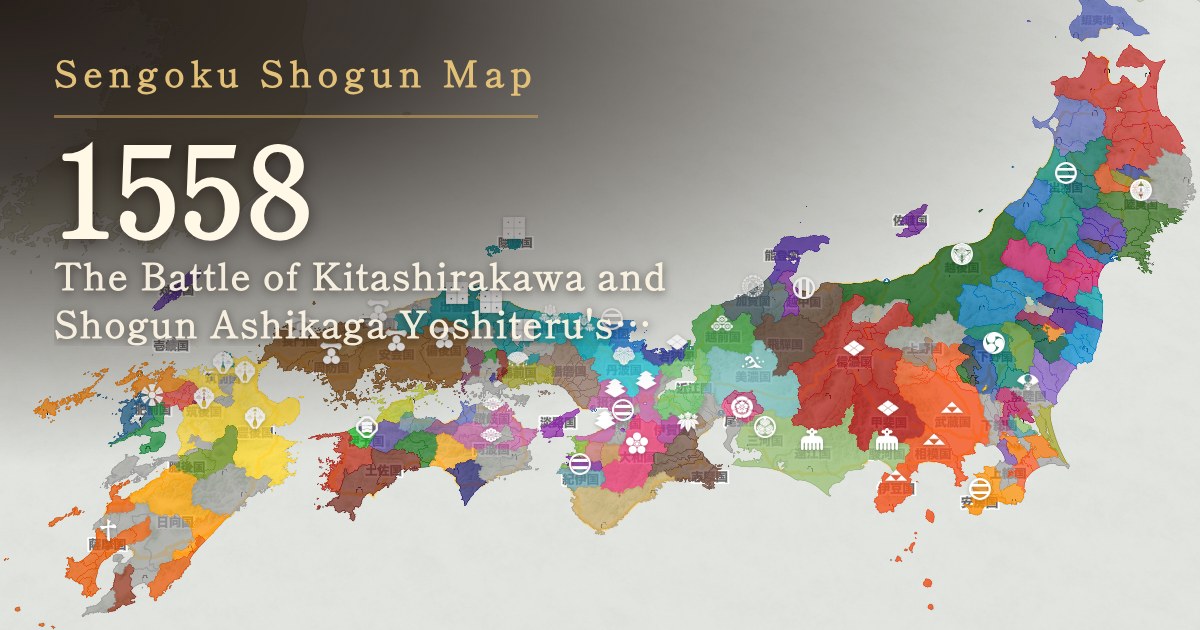
Shogun Ashikaga Yoshiteru, who had taken refuge in Ōmi, raised an army to retake Kyoto and clashed with Miyoshi Nagayoshi's forces at Kitashirakawa, but was defeated. In November, however, the two sides reached a peace settlement, and Yoshiteru returned to Kyoto for the first time in five years. Shogunal authority saw a temporary revival, and daimyo from across the provinces began paying visits to pay their respects.
Events this year
Month 6
Under pressure from Hōjō Ujiyasu, Yanada Harusuke relocated his headquarters from Sekiyado Castle to Koga Castle. Ashikaga Yoshiuji, the Koga kubō, established Sekiyado as his new seat, and Ujiyasu strengthened his influence over the Koga kubō.
Sano Toyotsuna, supporting Nagao Kagetora who invaded Shimotsuke, attacked Takō Castle, but Takō Nagatomo slew him and repelled the Echigo forces.
Sources 上三川町「上三川町歴史年表」「多功城址」
Month 7
Ashikaga Yoshiteru, trying to retake the capital, was beaten by the Miyoshi at Kitashirakawa. Terms were reached in the eleventh month, and he returned to Kyoto after five years.
See this battle in detail →Sources 京都府教育委員会 文化財保護課「北白川(勝軍山)城跡」/Wikipedia「北白川の戦い」
Month 11
Ryūzōji Takanobu launched a preemptive strike against Egami Taketane. After Oda Masamitsu of the vanguard fell in battle at Kammuta Nawate, Takanobu made a surprise assault and took Hasuike Castle.
Matsudaira Motoyasu is said to have attacked Suzuki Shigetatsu, lord of Terabe Castle, who had defected to the Oda faction while serving the Imagawa. This is said to be his first battle.
Oda Nobunaga beat the Oda of Iwakura at Ukino. With the fall of Iwakura Castle the next year, Owari was united in his hands.
See this battle in detail →Sources 愛知県「岩倉城跡(あいち歴史観光)」/一宮市「一宮市ウォーキングマップ(浮野合戦場跡)」/岩倉市「山内一豊公と岩倉の歴史」