1591: Toyotomi Hideyoshi’s Unification of Japan
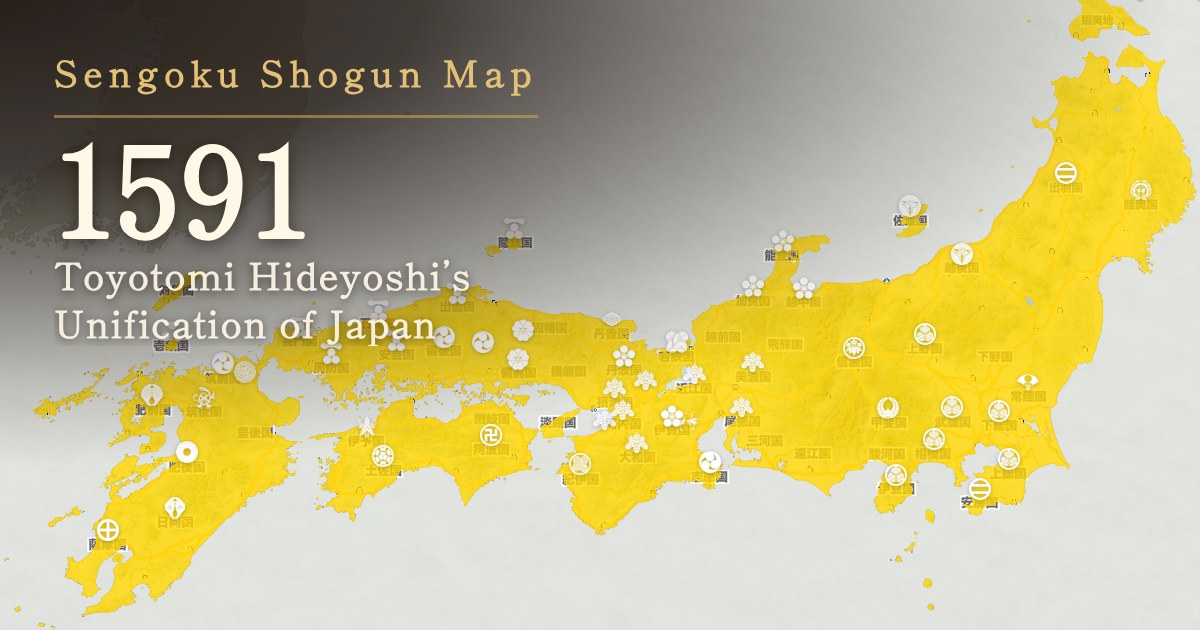
After the Odawara Campaign, the Toyotomi regime reassigned the northern lords, firmly establishing its rule across the entire country.
Events this year
1/22
Toyotomi Hidenaga died at Koriyama Castle. The loss of this key kinsman daimyō supporting Hideyoshi reshuffled succession issues within the Toyotomi house.
9/4
Surrounded at Kunohe Castle by the Toyotomi government's northern army, Kunohe Masazane surrendered, ending major organized resistance in Ōshū.
See this battle in detail →Sources 岩手県「九戸政実とは」/二戸市九戸城跡資料
10/10
Construction began on Nagoya Castle in Hizen as Toyotomi Hideyoshi's base for the invasion of Korea, with daimyō from across Japan assigned to the works.
Month 12
Toyotomi Hideyoshi transferred the office of kampaku to his nephew Hidetsugu, who took up government duties at Jurakudai.
Hōjō Ujinao, exiled to Kōya-san, was pardoned by Toyotomi Hideyoshi and took the Buddhist name Kenshōsai to serve him as a restored daimyō.
Hōjō Ujinao, recently restored to daimyō status, died shortly after. The Later Hōjō clan's tenure as a great power, spanning five generations and a century from Odawara, ended in 1590; Ujinao's early death prevented any restoration of the main family's rule.
Toyotomi Hideyoshi built the Odoi earthwork fortifications surrounding Kyoto, combining military defense, flood control, and urban planning. Concurrently, temple town development and the relocation of Honganji progressed.