1601: The Aftermath of Sekigahara—A Sweeping Reshuffle of the Daimyo
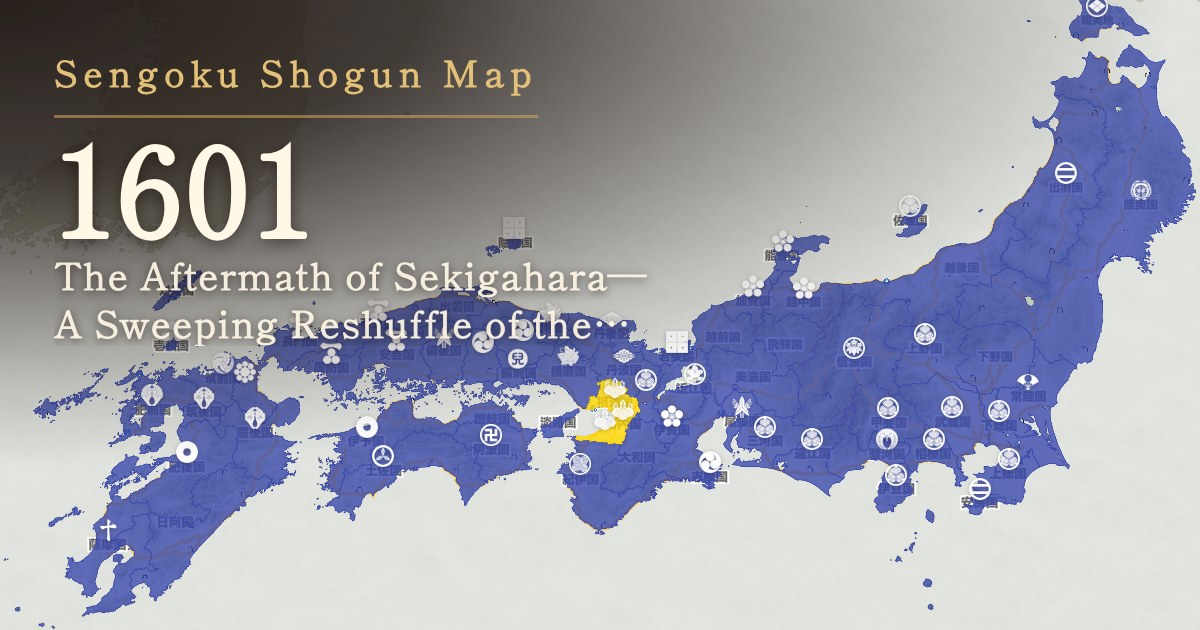
Soon after his victory at Sekigahara, Tokugawa Ieyasu carried out a reward and punishment campaign, stripping fiefs from daimyo who had sided with the Western Army while granting increased holdings to those who had backed him. Many daimyo who owed their positions to the Toyotomi were relocated to distant regions such as Chūgoku, Shikoku, and Kyūshū, while the strategic Kinai and Tōkaidō regions were filled with Tokugawa relatives and hereditary vassals, establishing the pattern of daimyo placement that would define the Edo period.
Events this year
1/8
After being granted Tosa Province following Sekigahara, Yamauchi Kazutoyo traveled overland from Kannoura and entered Urado Castle.
After Sekigahara, Sanada Masayuki and Nobushige surrendered Ueda Castle to the Tokugawa side, and the castle was dismantled.
After surrendering Ueda Castle, Sanada Masayuki and Nobushige were exiled to Kudoyama below Mount Kōya in Kii Province.
After Sekigahara, Uesugi Kagekatsu was reduced from 1.2 million koku in Aizu to 300,000 koku at Yonezawa and shifted the center of his domain there.
Tokugawa Ieyasu ordered western daimyō to build Nijō Castle as a guard for the Kyoto Imperial Palace and a residence for shogunal visits.