1600: Battle of Sekigahara and Postwar Reorganization
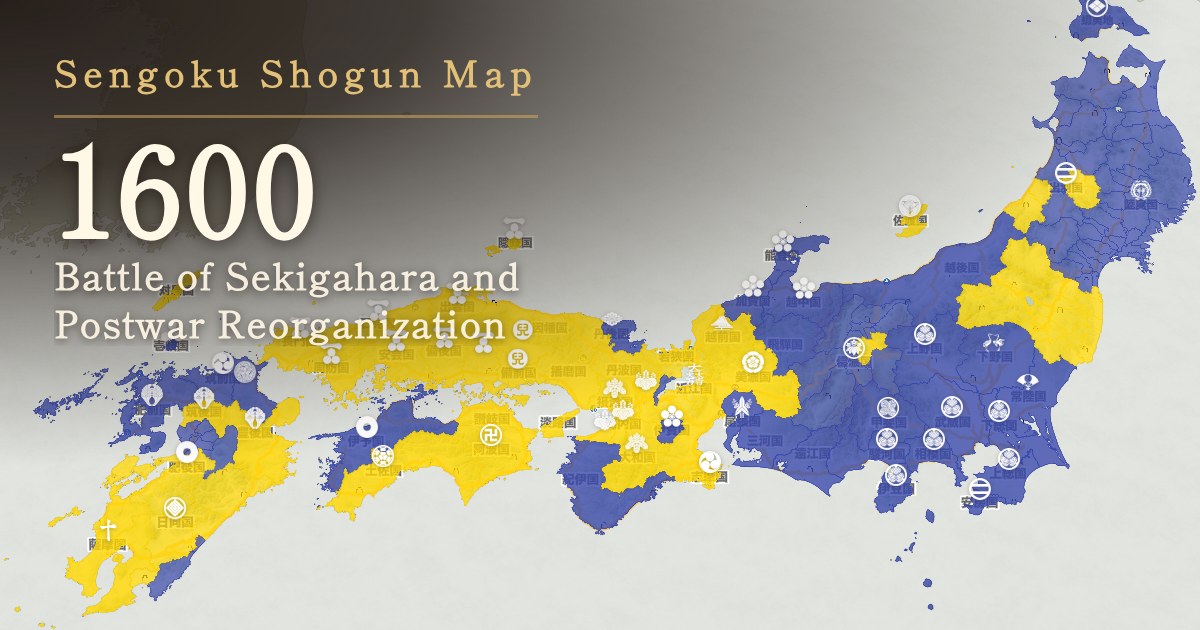
The Western Army led by Ishida Mitsunari and the Eastern Army led by Tokugawa Ieyasu confronted each other on a nationwide scale. In October, the Eastern Army won a decisive victory at Sekigahara. Preliminary battles were fought at Fushimi, Gifu, Otsu, Ueda, and in the northern provinces. After the war, massive reassignments, dispossessions, and rewards reshaped the daimyōs, solidifying Tokugawa supremacy.
Events this year
Month 7
After Tokugawa Ieyasu marched toward Aizu, the Western Army surrounded Fushimi Castle, defended by Torii Mototada and his garrison.
See this battle in detail →Sources 京都市「都市史20 伏見城」/京都市「伏見区の歴史:安土桃山時代 秀吉が開いた城下町」/京都市文化財保護課「伏見城跡・指月城跡 現地説明会資料」
8/1
Fushimi Castle fell and burned after the Western Army's assault, and its commander Torii Mototada and the garrison were killed.
8/23
Eastern Army commanders including Fukushima Masanori and Ikeda Terumasa captured Gifu Castle from Oda Hidenobu, securing the route through the Tōkaidō region.
Month 9
Tokugawa Hidetada's army attacked Ueda Castle, defended by Sanada Masayuki and Nobushige, but failed to take it and was delayed on its westward march.
See this battle in detail →Sources 上田市「上田城の歴史」/上田市「史跡上田城跡」
An Uesugi army under Naoe Kanetsugu invaded Mogami territory but failed to take Hasedo Castle and withdrew after news of Sekigahara.
See this battle in detail →Sources 山形市「長谷堂城跡」/山形城公式「歴代城主」/山形市地域教材「長谷堂合戦」
10/21
The decisive battle in Mino: Tokugawa Ieyasu’s Eastern Army defeats the Western Army.
See this battle in detail →Sources 岐阜県「岐阜関ケ原古戦場記念館」/関ケ原観光ガイド「決戦地」/関ケ原観光ガイド「開戦地」