1605: Ieyasu Cedes the Shogunate to Hidetada and Begins Rule as Retired Shogun
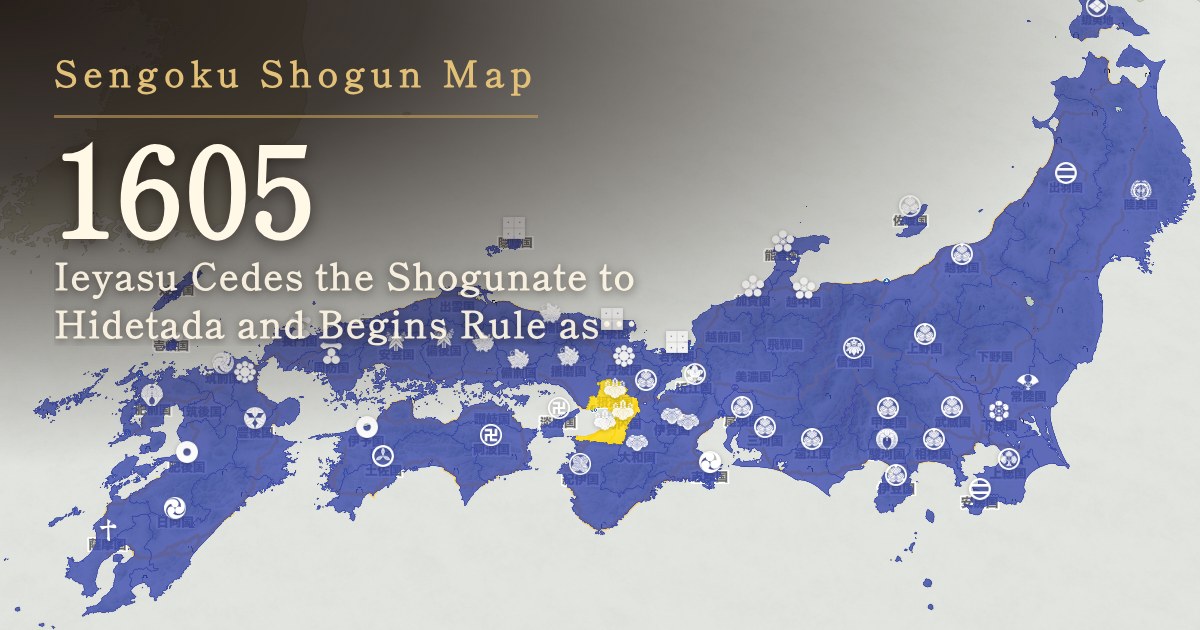
Only two years after becoming shogun, Ieyasu ceded the title to his son Hidetada, a move intended to demonstrate to all that the shogunate would be hereditary within the Tokugawa house. Ieyasu himself retired to Sunpu, taking the title of Ōgosho (retired shogun), and while formally stepping back he retained real power, establishing a dual system of governance that oversaw Hidetada's administration in Edo.
Events this year
4/8
Maeda Toshitsune, adopted heir of Kaga daimyō Maeda Toshinaga, had an audience with Tokugawa Ieyasu and Tokugawa Hidetada in Kyoto, underwent his coming-of-age ceremony, was appointed to court rank, and received the Matsudaira surname.
4/12
At court, Hideyori was promoted from Minister of the Interior to Minister of the Right. This appointment occurred four days before Tokugawa Hidetada's formal appointment as shogun.
4/16
At Fushimi Castle, Tokugawa Ieyasu transferred the shogunate to Hidetada, demonstrating that the office would be inherited within the Tokugawa family.
6/28
Kaga daimyō Maeda Toshinaga transferred the headship to his adopted heir Toshitsune and retired to Toyama Castle, receiving 220,000 koku in Shinkawa district of Etchu as his retirement lands.