互动战役
关原之战
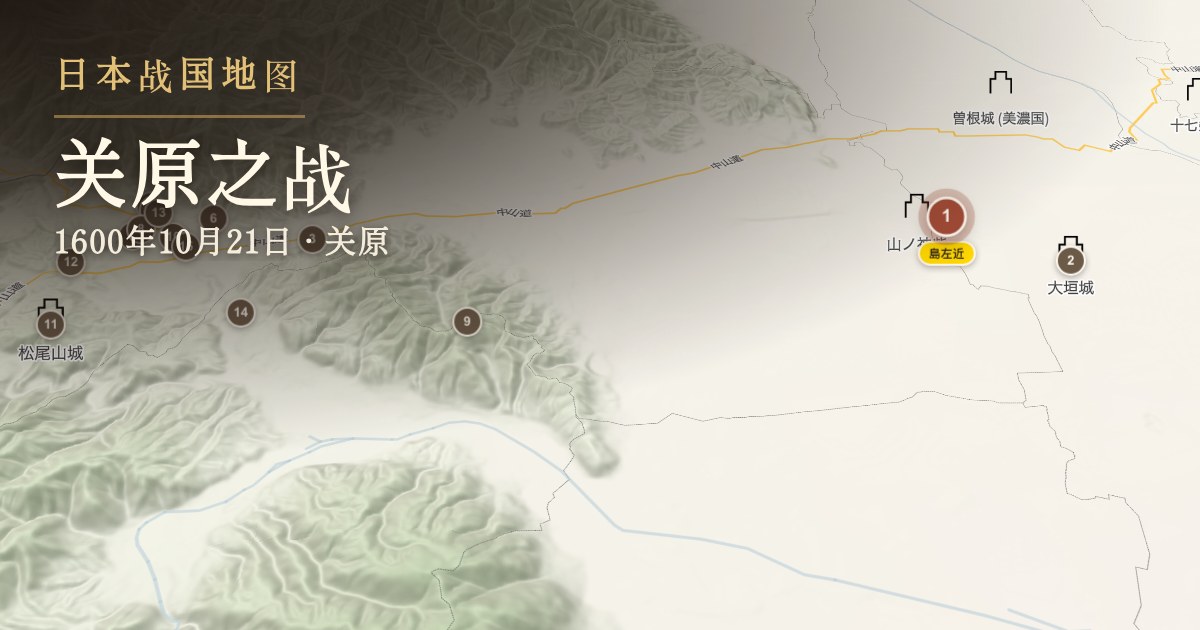
1600年10月21日 · 关原
东西两军在美浓关原激战,德川家康率领的东军大胜。
背景
秀吉死后,围绕丰臣政权主导权的对立发展为全国规模的战争。石田三成在关原之战一个多月前进入西美浓要冲大垣城,将其作为西军本营,准备迎击东军西上。从福束城之战、岐阜城攻防战,到前一日的杭濑川之战,两军的交战均以大垣城为轴心展开。德川家康于9月14日进抵冈山(大垣市赤坂)。
结局
小早川秀秋倒戈使西军全线崩溃,胜负仅在半日左右便已决定。大谷吉继自刃,石田三成逃向伊吹山,10月27日被捕,11月6日与小西行长、安国寺惠琼一同在京都六条河原被处刑。岛津义弘突破东军中央返回萨摩,南宫山的毛利军则始终按兵不动。次日,家康命竹中重门埋葬阵亡者,修筑了东西两处首冢。
战况年表
1 10月20日
西军在杭濑川获胜
岛左近、蒲生备中等约500人出大垣城,先设伏兵,渡过杭濑川挑衅东军中村一荣队。待其出战,以佯退诱入伏中将其击破,提振了西军士气。
论点
岐阜县的解说指出,杭濑川的川筋已经改变,战斗发生的场所并不确定。
Crossed the Kuise river with 500 men and broke Nakamura's unit.
出处356·可信度:高
2 10月20日 夜
西军出大垣城前往关原
3 10月21日 上午6时前后
家康在桃配山布阵
德川家康于前一日九月十四日进抵冈山(大垣市赤坂),当日上午6时前后在俯瞰东山道的桃配山布阵。
Deployed on Momokubariyama around 6 a.m.
出处12·可信度:高
4 10月21日 拂晓前
两军在关原布阵
西军以笹尾山的石田三成、松尾山的小早川秀秋为两翼,布成鹤翼之阵。东军在关原盆地中央以福岛正则为先锋,布成鱼鳞之阵。南宫山有毛利秀元、吉川广家等布阵,东军的池田辉政、浅野幸长在此加以戒备。
论点
各阵迹的位置,建立在明治时期乡土史家神谷道一所奠定的布阵地比定之上,并非同时代史料给出的坐标。
Deployed on Sasaoyama.
Deployed at the foot of Sasaoyama.
Deployed on Kita-Tenmanzan.
Deployed on Minami-Tenmanzan with about 17,000 men.
Deployed with his nephew Toyohisa and some 1,500 men.
Deployed in Yamanaka facing Matsuoyama.
Deployed on Matsuoyama, 293 m high.
Deployed on Nangusan as Terumoto's deputy.
Deployed on the eastern side of Nangusan.
Deployed on Nangusan.
Took position on Nangusan.
Deployed on Nangusan.
Held the point of the Eastern array in the centre of the basin.
Deployed near the present Sekigahara station.
Deployed with Matsudaira Tadayoshi.
Deployed on Okayama with Takenaka Shigekado.
Deployed on Okayama with Kuroda Nagamasa.
Deployed west of Okayama.
Deployed behind the Eastern line.
Deployed at Tarui to guard against Nangusan.
Deployed near the Tarui milestone.
出处12·可信度:中
5 10月21日 上午
井伊队抢先出击揭开战端
6 10月21日 上午
两军以烽火传递开战
7 10月21日 上午
岛左近在笹尾山麓负伤
8 10月21日 上午
岛津队按兵不动
9 10月21日 上午
南宫山的毛利军不动
毛利秀元作为辉元的名代在南宫山布阵,却被暗通家康的吉川广家挡在前面而无法出动。长束正家、长宗我部盛亲也始终未能参战。
Could not move because Kikkawa and others were in contact with Ieyasu.
In contact with Ieyasu, he stayed in front of the Mori force.
Was left a spectator on Nangusan.
Withdrew to Minakuchi in Omi without engaging.
Never moved.
出处12·可信度:高
10 10月21日 上午11时前后
家康把本阵推进至阵场野
由于难以掌握战况,家康把本阵移到正对笹尾山石田三成阵地的阵场野,从靠近前线之处激励东军。
论点
所谓他从此阵地开枪威慑松尾山的小早川秀秋,只是流传下来的一种说法。
Moved his headquarters to Jinbano.
出处12·可信度:高
11 10月21日 正午前后
小早川秀秋倒戈
12 10月21日 正午前后
大谷队覆灭
布阵于松尾山正面的大谷吉继遭小早川秀秋、胁坂安治等从三面攻击。因病而乘轿指挥的吉继,所部覆灭,本人自刃。
Attacked from three sides; his contingent destroyed, he took his own life.
Had been entrusted with command at the front in Yoshitsugu's stead.
Crossed swords with the Otani contingent.
Fought the Otani contingent with the Todo unit.
Charged down on the Otani from Matsuoyama.
出处12·可信度:高
13 10月21日 下午
西军在决战地全面崩溃
14 10月21日 下午
岛津队突破敌阵
历史地位
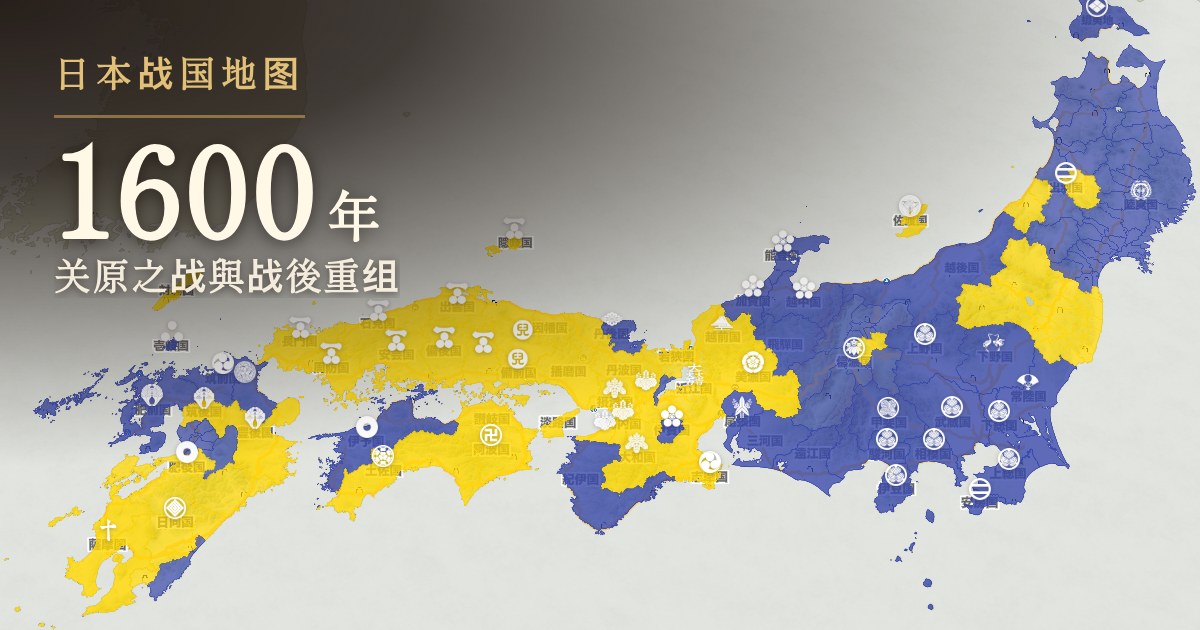
世人多以为天下在一日之战中易主,实际上这是一场涵盖伏见、岐阜、大津、田边、出羽、丰后等各地的广域战争,关原是其决着之处。丰臣秀赖仍留在大坂城,德川与丰臣的最终了断要等到1614至1615年的大坂之阵。战后的改易与加增转封重新排布了全国领主,1601年的势力图为德川政权66国、丰臣氏3国。
主要相关人物
徳川方
13人
Commander of the Eastern army
Reached Okayama in Ogaki on the 14th and deployed at Momokubariyama around 6 a.m. on the 15th, then moved his headquarters opposite Mitsunari's position around 11 a.m.
出处12·可信度:高
Vanguard of the Eastern army
Deployed near the present Sekigahara station and, with Ii Naomasa, broke ranks to fire on the Ukita contingent.
出处12·可信度:高
Vanguard and inspector of the Eastern army
Holding that the Tokugawa house should strike first, he broke ranks with Matsudaira Tadayoshi to open the battle, and pursued the Shimazu in the afternoon.
出处12·可信度:高
Leading unit of the Eastern army
Held the point of the Eastern army's fish-scale formation in the centre of the Sekigahara basin, and attacked the Ukita after the Ii and Matsudaira units pre-empted him.
出处12·可信度:高
Eastern army, Okayama position
Deployed on Okayama hill with Takenaka Shigekado and some 5,000 men, raised the signal fire at the outset, and wounded Shima Sakon with musket fire.
出处12·可信度:高
Eastern army, Okayama position
Shared the Okayama position with Kuroda Nagamasa, and the day after the battle was ordered to bury the dead and raise the two head mounds.
出处12·可信度:高
Inspector of the Eastern army
In the afternoon he joined the Matsudaira and Ii units in pursuing Shimazu Yoshihiro.
出处12·可信度:高
Eastern army
Fought Otani Yoshitsugu's units together with Kyogoku Takatomo, and is said to have been in secret contact with Wakisaka Yasuharu.
出处12·可信度:中
Eastern army
Helped break the Ishida contingent, and afterwards was ordered to search for Mitsunari, capturing him in the Ibuki mountains.
出处12·可信度:高
Eastern army
After the assault on Gifu Castle he deployed at Tarui to guard against the forces on Nangusan.
出处12·可信度:中
Eastern army
Having taken Gifu Castle, he deployed near the Tarui milestone to watch the Mori forces on Nangusan.
出处12·可信度:中
石田方
16人
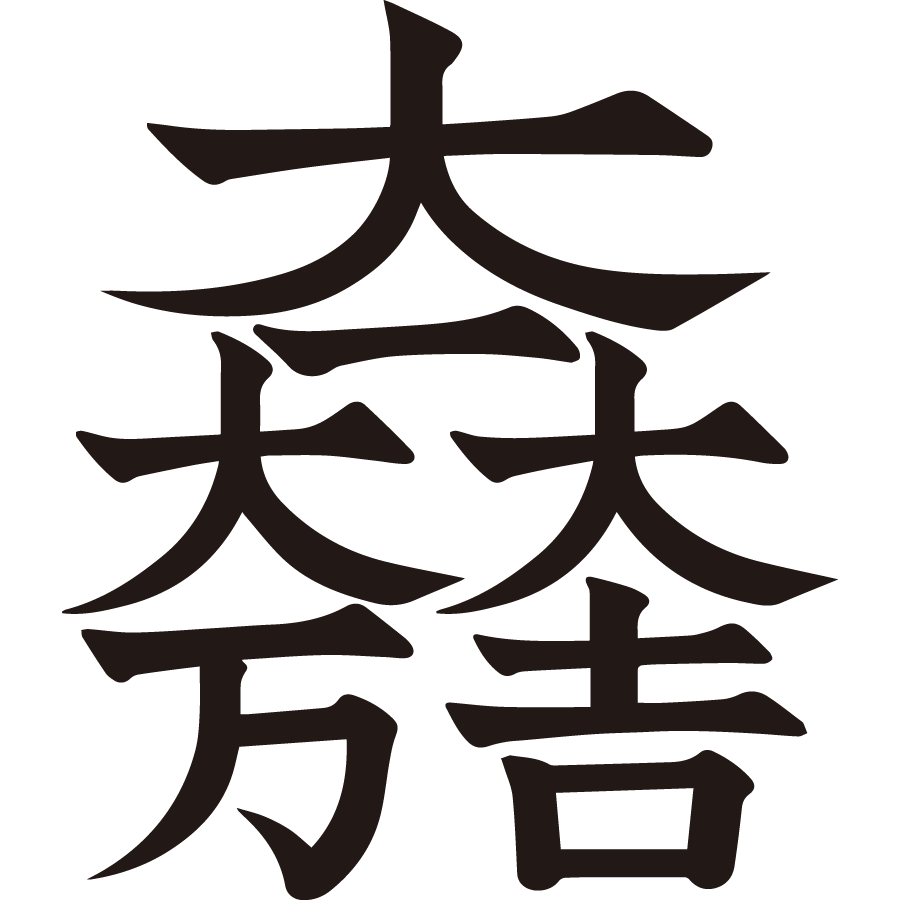
Core of the Western army
Deployed on Sasaoyama, which overlooks the field and commands the Hokkoku road; when the Western army broke he fled toward Mount Ibuki and was later captured by Tanaka Yoshimasa.
出处12·可信度:高

Commander under Ishida
Won the previous day's fight at the Kuise river with 500 men and held the foot of Sasaoyama, but was wounded by Kuroda musket fire and left the line.
出处12·可信度:中

Deputy commander of the Western army
Held Minami-Tenmanzan with about 17,000 men, the largest Western contingent, and had covered the rear on the march to Sekigahara.
出处12·可信度:高

Western army
Deployed on Kita-Tenmanzan and raised a signal fire as the battle opened; after the rout he gave himself up and was executed in Kyoto with Mitsunari.
出处12·可信度:高

Western army
Deployed in Yamanaka facing Matsuoyama and directed his men from a palanquin because of illness; attacked from three sides by Kobayakawa and Wakisaka, his contingent was destroyed.
出处12·可信度:高
Commander under Otani
Lord of Tarui Castle; he served under Otani Yoshitsugu and was entrusted with command at the front in his stead.
出处12·可信度:中

Western army
Deployed with his nephew Toyohisa and some 1,500 men, stayed on the defensive through the morning and refused Mitsunari's call for support, then broke through the Eastern centre and returned to Satsuma.
出处12·可信度:高
Western army
Yoshihiro's nephew; he covered the retreat and fought the Eastern pursuit at Utozaka.
出处12·可信度:中

Turned from the Western to the Eastern army
Deployed on Matsuoyama, 293 m high, and resolved to go over to the Eastern side he had been in contact with; the Western army collapsed from that point.
出处12·可信度:高
Turned from the Western to the Eastern army
Approached beforehand by Todo Takatora, he changed sides with three other contingents once Kobayakawa turned.
出处12·可信度:中
Western army, Nangusan
Deployed on Nangusan as Mori Terumoto's deputy, but could not move—and so could not join the battle—because Kikkawa Hiroie and others were in contact with Ieyasu.
出处12·可信度:高

Western army, Nangusan
As the senior figure of the house he opposed Mori participation on the Western side, and deployed on Nangusan after secretly reaching Ieyasu.
出处12·可信度:高

Western army, Nangusan
He had a hand in making Mori Terumoto the Western commander-in-chief; unable to move from Nangusan, he was beheaded after the battle with Mitsunari and Yukinaga.
出处12·可信度:中
Western army, Nangusan
He marched from Ise into Mino and took position on Nangusan, but withdrew to his domain at Minakuchi without engaging.
出处12·可信度:中

Western army, Nangusan
Deployed on Nangusan as part of the Western main force, but never moved.
出处12·可信度:中

Commander-in-chief of the Western army
Raised as commander-in-chief of the Western army, he remained in Osaka Castle and never took the field at Sekigahara.
出处12·可信度:高
1600年的其他事件
数据注意事项
出处所载日期为旧历,本战相当于庆长五年九月十五日。公历以已经过查证的1600年10月21日为基准,同一旧历九月内的日期按相同日差换算。各阵迹的位置是明治时期以后的比定地。
参考资料
- 岐阜関ケ原古戦場記念館「古戦場・史跡巡り」
- 岐阜県観光公式サイト「岐阜の旅ガイド」
- 大垣市「市指定史跡 関ケ原合戦岡山本陣跡」
- 岐阜県「岐阜関ケ原古戦場記念館」
- 岐阜県観光公式サイト「杭瀬川古戦場」
- 大垣・西美濃観光ポータル「関ケ原合戦 決戦前夜 大垣城」
- 城郭マスタ(shiro.geojson)
- 関ケ原観光ガイド「開戦地」
- 関ケ原観光ガイド「決戦地」
- 国土地理院 住所検索
正文中的编号对应上方列表中的资料。可信度表示该记述在出处中获得多大程度的佐证,并非指坐标的精度或年代的确度。
广告