1587: The Pacification of Kyūshū and the Edict Expelling Christian Missionaries
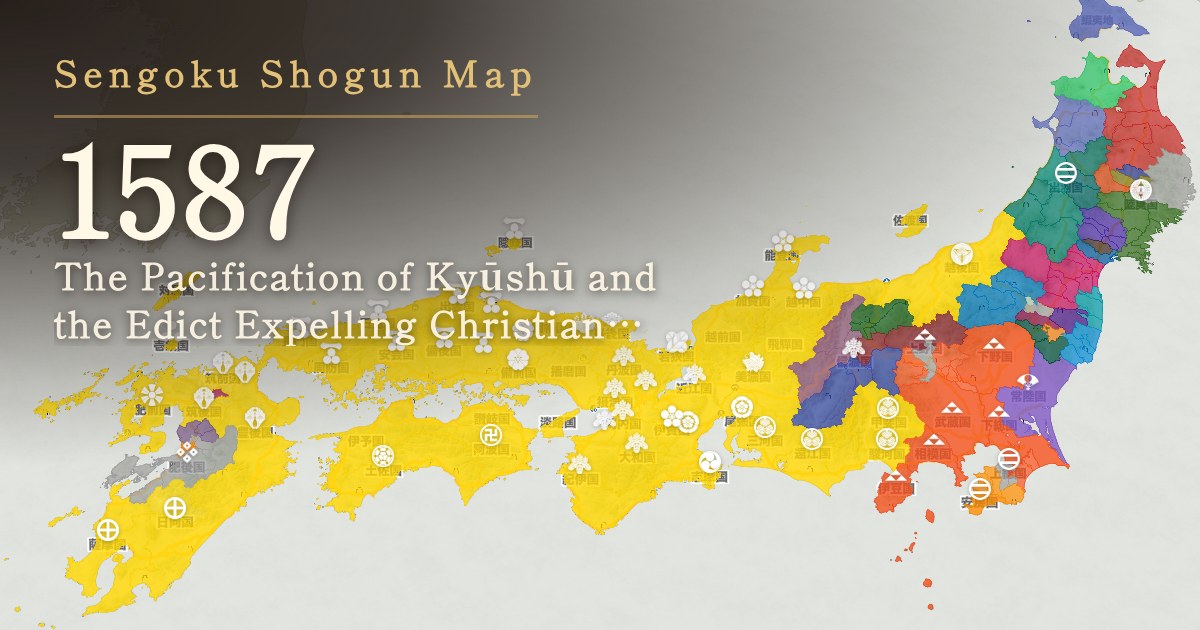
Hideyoshi sent an army of over 200,000 into Kyūshū, forcing Shimazu Yoshihisa's surrender and pacifying nearly the entire island. On his return journey through Hakata, he issued an edict expelling Christian missionaries, prompted in part by concerns over the destruction of shrines and temples and the trafficking of Japanese people by Christian daimyo and their associates.
Events this year
4/17
Toyotomi Hidenaga's forces besieged Takajō Castle in Hyūga. A relief army led by Shimazu Yoshihisa attacked at night but failed, leading to the Shimazu's surrender.
See this battle in detail →Month 5
Following the Toyotomi advance into Kyushu, Shimazu Yoshihisa submitted to Hideyoshi at Taiheiji in Sendai.
See this battle in detail →Sources 鹿児島県「秀吉の九州遠征」/福岡市博物館「戦国時代の博多展4」/文化遺産オンライン「豊臣秀吉条書 筑前国箱崎宛」
Month 9
Jurakudai was completed in Kyoto and became Toyotomi Hideyoshi's center for government and control of the daimyō.
10/1
Toyotomi Hideyoshi held a large tea gathering at Kitano Tenmangū that was open to participants regardless of social rank.
After the Kyushu campaign, Toyotomi Hideyoshi issued an edict at Hakata ordering Christian missionaries to leave. He also confiscated Nagasaki, Mogi, and Urakami from Jesuit control as government lands, though the edict did not immediately create a complete nationwide ban on the faith.
Sources 長崎市「長崎の歩き方」/長崎市「キリスト教の伝来と長崎」/金沢市「高山右近自筆書状」