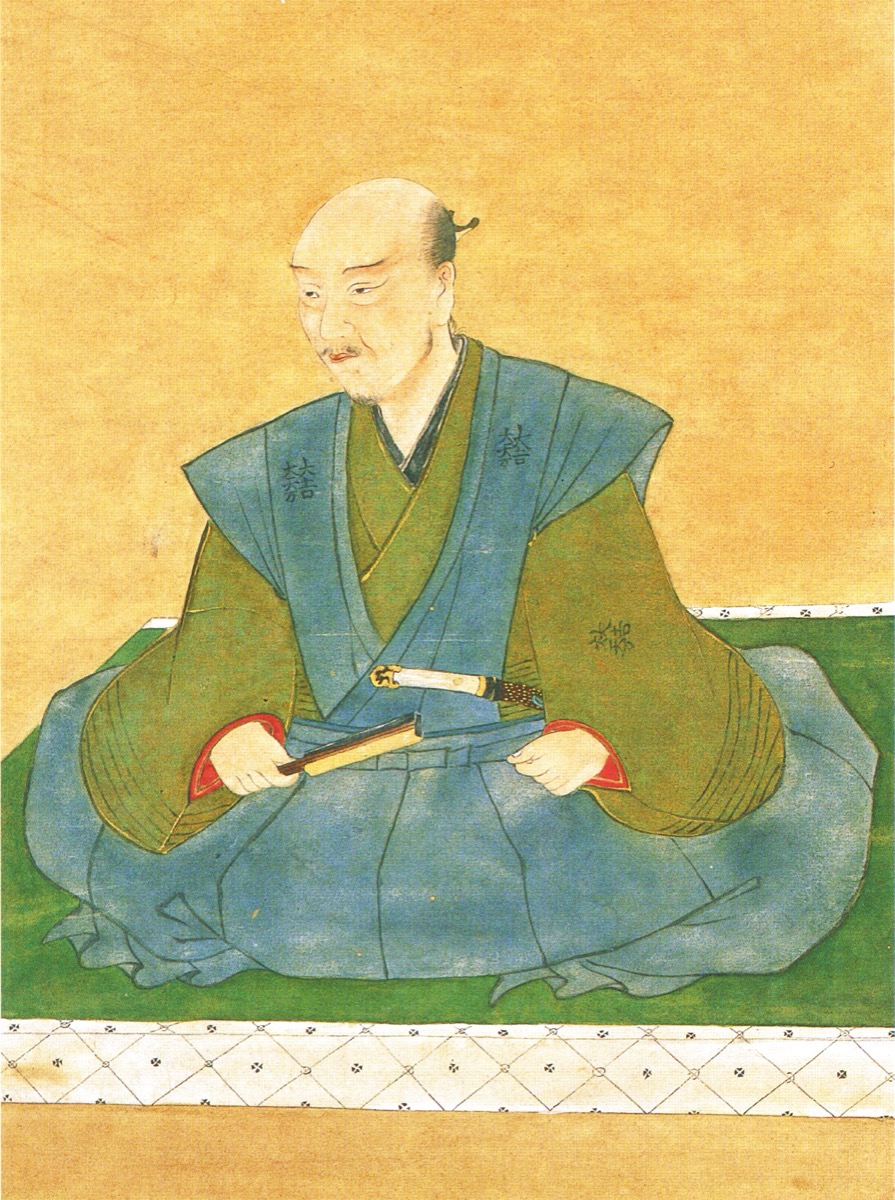
 作者不詳「絹本著色 石田三成像(模本)」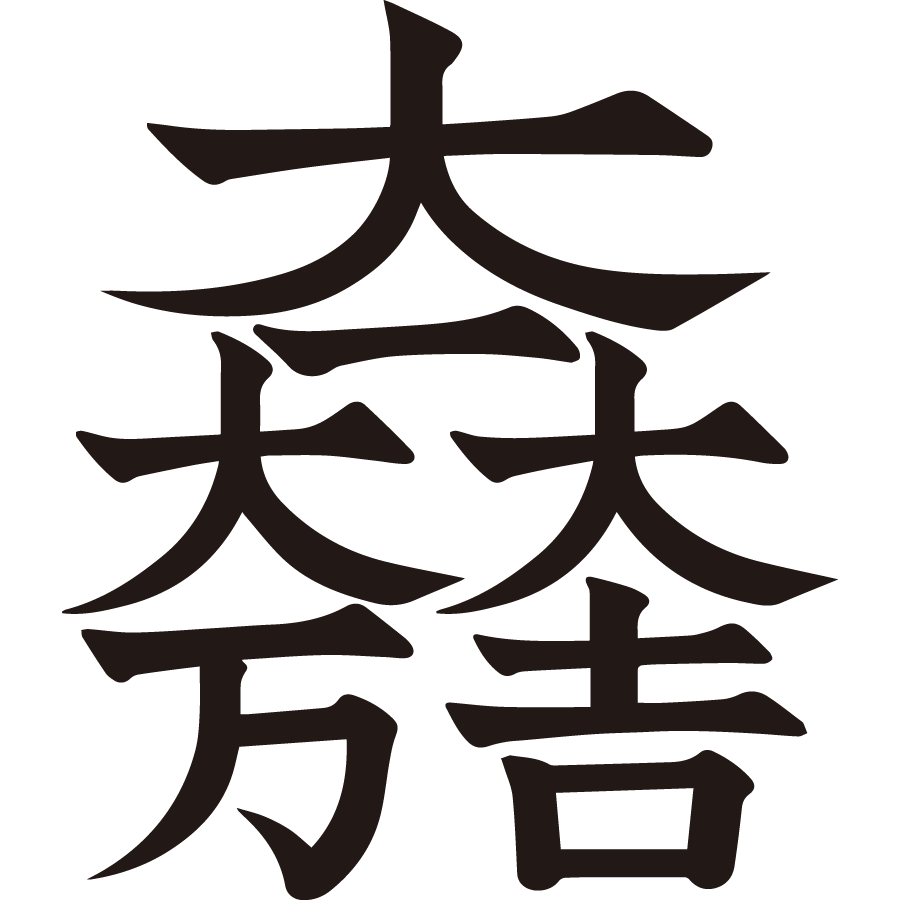
Toyotomi regime magistrate and lord of Sawayama Castle
Ishida Mitsunari
石田三成
A close attendant and magistrate of Toyotomi Hideyoshi, Ishida Mitsunari was involved in land surveys, government administration—including the management of directly controlled estates—and the military administration of the campaigns in Korea, while basing himself at Sawayama in Ōmi Province. His common name was Sakichi, and his official title was Jibu-shōyū (Junior Assistant Minister of Civil Administration). A land-survey register from 1584 records him taking part in fieldwork with other magistrates, and in the Sawayama domain he issued regulations governing such matters as annual tribute payments, service obligations, and the treatment of peasants who had fled. Mitsunari under Hideyoshi should therefore be understood not merely as a bureaucrat who drafted letters, but as a magistrate who combined on-site surveys of land and tribute, orders and recordkeeping through written documents, governance of a domain encompassing castles, roads, and villages, and the reporting, logistics, and transmission of military orders that linked the battlefront with Hideyoshi's government at Fushimi. Later accounts have often projected the outcome of his conflict with Tokugawa Ieyasu at Sekigahara backward onto his earlier career, portraying him either as the leader of a 'civil-administration faction' opposed to battlefield commanders or as a 'slanderous bureaucrat' who reported other commanders' failures to Hideyoshi and had them punished. On the Korean front, however, Mitsunari and the other magistrates handled the transmission of orders, military administration, and reporting; reports used to evaluate combat were also prepared by military inspectors such as Fukuhara Nagataka; and Hideyoshi made the final decisions on rewards and reprimands. It can be established that commanders at the front resented being judged solely through documents produced at the center, without sufficient regard for local exhaustion, the state of provisions, or whether pursuit after a relief operation was feasible, and that this created tension with the magistrates and military inspectors. Yet attributing that tension to Mitsunari's personal grudges or slander, and grouping the commanders into a coherent 'military faction,' obscures the differing roles of reporters, magistrates, and the final decision-maker. What the sources support is a structural conflict among Hideyoshi's orders, the documentary work of magistrates and military inspectors, and the military judgments and assessments of merit made by commanders serving overseas. Contemporary primary sources do not substantiate the further claim that Mitsunari drove punitive decisions out of personal resentment. The widely known story of the 'Three Cups of Tea,' in which Hideyoshi supposedly noticed Mitsunari as a boy after he served three cups varying in temperature and quantity, is likewise a later tradition that cannot be verified in contemporary primary sources as an account of their first meeting.
Sources 国立歴史民俗博物館「天正十二年十一月十六日 江州蒲生郡今在家検地帳」/長浜城歴史博物館「石田三成判物 今井清右衛門尉宛」/長浜城歴史博物館「近江出身の豊臣奉行・石田三成」/国立歴史民俗博物館「石田三成掟書」/彦根市「佐和山城」/彦根市「彦根市について」/行橋市デジタルアーカイブ『行橋市史』/熊本市「加藤清正」資料/国立公文書館「関ヶ原の戦い」
Related events
6
1590
Month 11
Kasai-Osaki Uprising
Ishida Mitsunari — 奥羽仕置に関与Former retainers in the confiscated Kasai and Osaki territories rose against the newly installed Kimura house before being defeated at Sanuma Castle.
1600
Month 8
Siege of Tanabe Castle begins
Ordered the attack on TangoWith Hosokawa Tadaoki away on the Aizu campaign, Tango was attacked on Ishida Mitsunari's orders. Tadaoki's father Yusai held Tanabe Castle with about 500 men against a Western force said to number 15,000.
9/8
Fall of Fushimi Castle
Led the Western army's risingFushimi Castle fell and burned after the Western Army's assault, and its commander Torii Mototada and the garrison were killed.
10/21
Battle of Sekigahara
Core of the Western armyThe decisive battle in Mino: Tokugawa Ieyasu’s Eastern Army defeats the Western Army.
10/27
Ishida Mitsunari is captured
Taken at FuruhashiIshida Mitsunari, who had fled from Sekigahara toward Mount Ibuki, was taken at Furuhashi in Omi by a search party under Tanaka Yoshimasa acting on Ieyasu's orders.
11/6
Mitsunari and others are executed at Rokujogawara
Executed at RokujogawaraIshida Mitsunari was beheaded at Rokujogawara in Kyoto together with Konishi Yukinaga and Ankokuji Ekei. The execution of the three men at the centre of the Western army closed the first phase of the settlement after Sekigahara.
Advertisement