1571: The Burning of Mount Hiei and Escalating Coalition Tensions
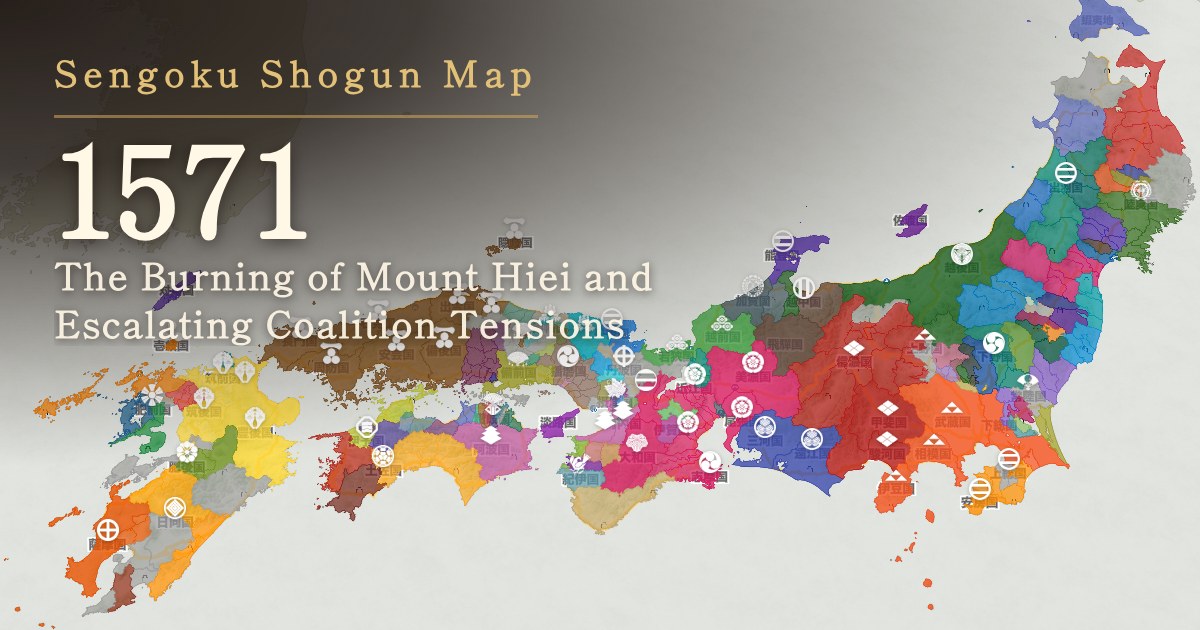
As the aftermath of Anegawa and the Siege of Shiga continued, Oda Nobunaga intensified pressure on opposing forces in the Kinai. Conflict with anti-Nobunaga powers including the Azai, Asakura, Hongan-ji, Enryaku-ji, and shogun Ashikaga Yoshiaki sharpened, culminating in the burning of Mount Hiei in September.
Events this year
Spring
In northern Ōmi and Echizen, Azai Nagamasa and Asakura Yoshikage marshaled their forces and continued to pressure Oda territories. The Oda side consolidated their control of southern Ōmi and the defense of Kyoto.
Month 2
Shogun Ashikaga Yoshiaki worked behind the scenes with daimyos and religious institutions to build a broader political front against Nobunaga.
Autumn
Mōri Terumoto maintained defensive lines in the Chūgoku region, preparing against Amago remnants and Oda westward advance while carefully assessing turmoil in Kinai.
In Shikoku, Chōsokabe Motochika further solidified control over Tosa, entering a phase where he sought to expand into Awa.
Month 8
The actions of major daimyo such as Uesugi Kenshin and Takeda Shingen were seen as affecting the situation in Kinai. Both Nobunaga and Yoshiaki sought opportunities for broader alliances.
Month 9
Oda Nobunaga launched a massive attack on the Enryakuji temple on Mount Hiei, burning temples and monastery buildings. He militarily and politically eliminated Enryakuji forces, demonstrating strong resolve to strengthen Oda control over Kinai.
Winter
In Kyushu, tensions persisted between Shimazu Yoshihisa and Ōtomo Yoshishige (Sōrin), with struggles for power continuing among regional warlords in the Hyūga and Higo regions.
Hōjō Ujiyasu died. Ujimasa became independent from his father's regency and advanced Hōjō control over the Kantō region as the clan's new leader.
Sources 小田原市「北条氏五代100年の歴史」