1572: Takeda Shingen's Western Campaign and the Shock of Mikatagahara
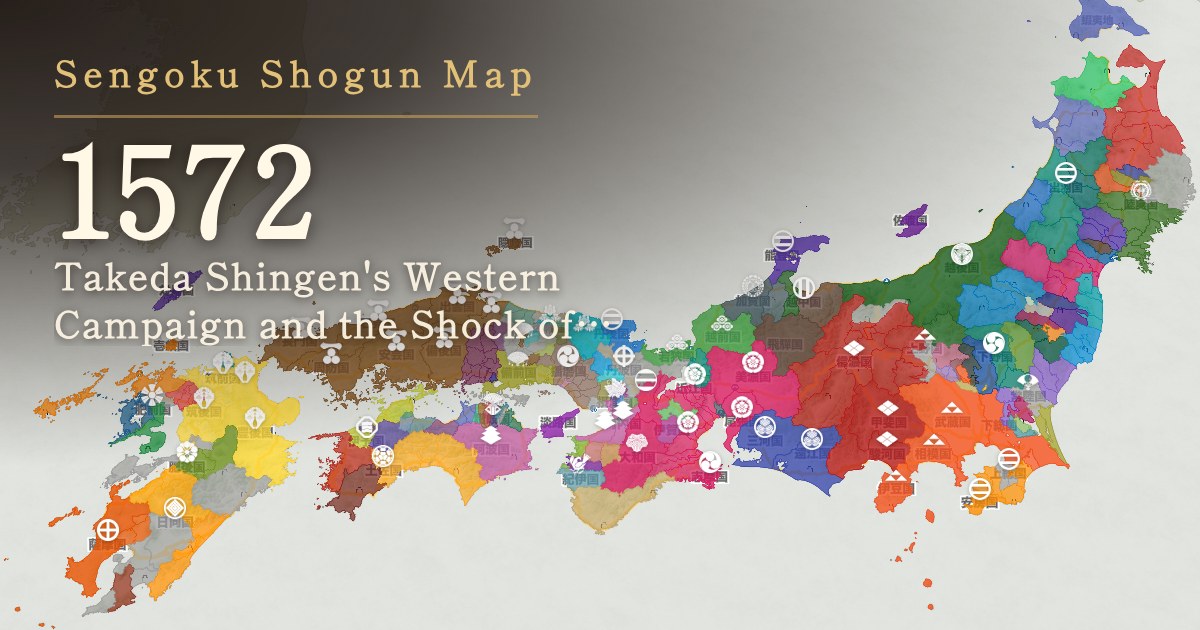
Even after the burning of Mount Hiei, conflict with the anti-Nobunaga forces did not subside. In 1572, Takeda Shingen's westward campaign placed heavy pressure on the Oda-Tokugawa side. Ashikaga Yoshiaki, the Azai and Asakura clans, and the Hongan-ji continued their anti-Nobunaga moves, keeping the coalition highly tense. At the end of the year Tokugawa Ieyasu suffered a crushing defeat at Mikatagahara, shaking the Tokai front and demonstrating that the anti-Nobunaga coalition still had real force.
Events this year
Month 1
Ashikaga Yoshiaki, Azai Nagamasa, Asakura Yoshikage, and the Hongan-ji forces all maintained their opposition to Nobunaga, and political as well as military tension around the Kinai remained high.
Spring
Shogun Ashikaga Yoshiaki continued reaching out to Takeda, Asakura, Azai, Hongan-ji, and other powers in an effort to preserve anti-Nobunaga cooperation.
Month 5
Takeda Shingen launched a full-scale advance toward Totomi and Mikawa, putting strong pressure on Tokugawa Ieyasu's territory and drawing attention as the coalition's most formidable military action.
Month 7
Despite pressure from Oda, the Azai and Asakura clans still maintained their position in northern Omi and Echizen, forcing Nobunaga to respond on both the Kinai and Tokai fronts.
Month 10
Takeda Shingen advanced into Totomi and placed strong pressure on Tokugawa castles. Anxiety spread within the Tokugawa camp, and the balance in Tokai became sharply more tense.
Month 12
Takeda forces captured Futamata Castle in Totomi, breaking through part of the Tokugawa defensive line. Ieyasu was driven into a situation where he had to endure from Hamamatsu and wait for a chance to counterattack.
See this battle in detail →Sources 浜松市「二俣城跡及び鳥羽山城跡」/静岡県「しずおか文化財ナビ 二俣城跡及び鳥羽山城跡」/浜松市「浜松市文化財情報vol.95」