1573: The Fall of the Muromachi Shogunate and the Collapse of the First Anti-Nobunaga Coalition
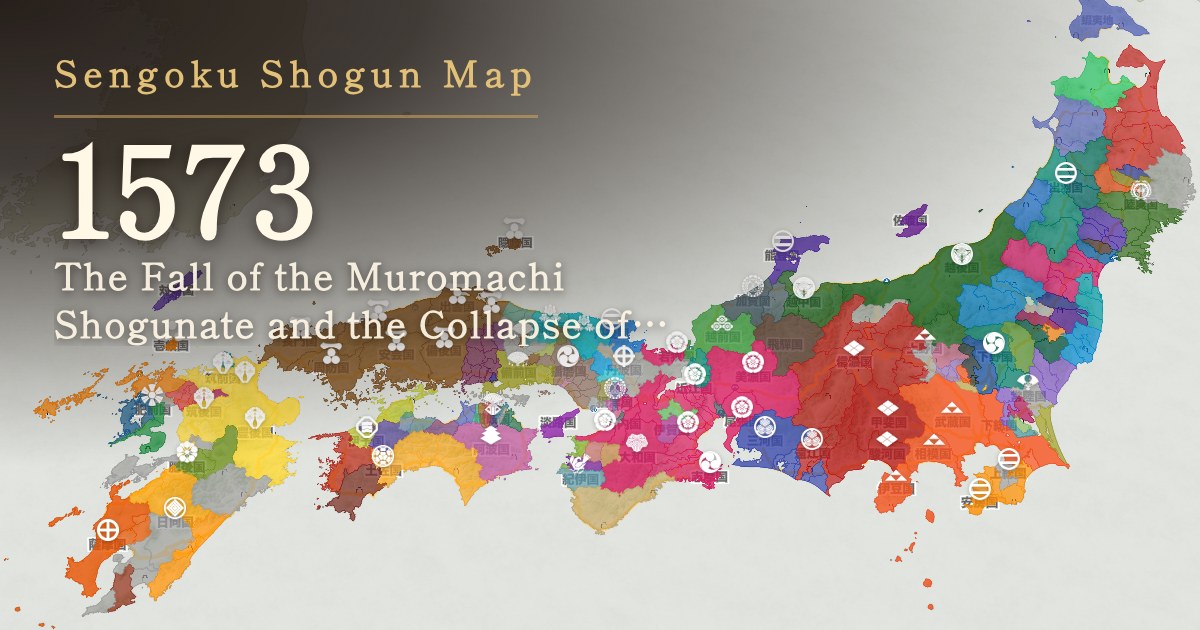
As the anti-Nobunaga forces lost cohesion following the death of Takeda Shingen, Oda Nobunaga intensified his offensives in Kinai and Ōmi. By attacking Makishima Castle, he drove Ashikaga Yoshiaki from power, effectively bringing the Muromachi shogunate to an end. He then destroyed Azai Nagamasa and Asakura Yoshikage, causing the first anti-Nobunaga coalition to largely collapse. Regional realignments also advanced elsewhere, making this year a turning point in which leadership in the late Sengoku period shifted decisively toward the Oda side.
Events this year
Spring
In Hokuriku, Uesugi Kenshin continued his involvement in Etchū and Noto, and tensions persisted with Oda-aligned forces and the Ikko-ikki.
1/25
Takeda forces clashed with the Tokugawa-Oda allied army at Mikatagahara in Totomi, and Ieyasu suffered a devastating defeat. Takeda Shingen's military prestige was displayed to the whole country and gave the anti-Nobunaga side a major psychological boost.
See this battle in detail →Sources Wikipedia「三方ヶ原の戦い」
Month 4
Takeda Shingen, who had been advancing on his western campaign, died of illness. With the loss of a figure capable of anchoring the anti-Nobunaga coalition, anti-Oda forces across the country lost much of their ability to coordinate.
Summer
Mōri Terumoto remained wary of Oda expansion westward while maintaining defensive lines in the Chūgoku region. Although there was still room for coordination with Yoshiaki, the rapid change in Kinai politics led the Mōri to adopt a more cautious stance.
Month 7
While Shogun Ashikaga Yoshiaki continued calling on various daimyō to rise against Nobunaga, Oda Nobunaga attacked Makishima Castle near Kyoto. Yoshiaki was defeated, surrendered, and was expelled from Kyoto.
With the expulsion of Ashikaga Yoshiaki, the Ashikaga shogunate's system of control over Kyoto collapsed. This year is generally regarded as the year in which the Muromachi shogunate came to an end.
Autumn
Having advanced the unification of Tosa, the Chōsokabe clan sought to expand its influence into Awa and Iyo. The balance of power in Shikoku gradually began to break down.
Month 8
As Oda forces invaded Echizen, Asakura Yoshikage abandoned Ichijōdani and fled. Combined with defections by his retainers, this led to his suicide and the destruction of the Sengoku daimyō house of Asakura.
8/9
Oda forces pursued the retreating Asakura army into Echizen and won a major victory. This decisively shattered the military foundation of the Asakura clan.
Month 9
Odani Castle in northern Ōmi fell to Oda forces, and Azai Nagamasa committed suicide. The Azai clan was destroyed, and northern Ōmi came under Oda control.
Winter
In Kyushu, Shimazu Yoshihisa consolidated his base in southern Kyushu, and the rivalry with Ōtomo Sōrin continued. A tense balance remained in place on the eve of full-scale conflict.